

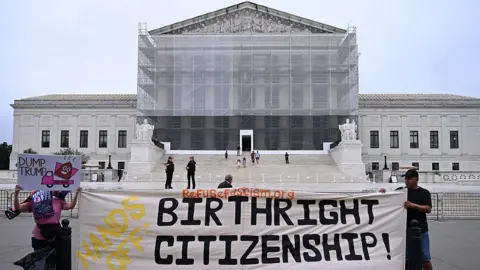
The US Supreme Court has will hear a pivotal case that challenges a century-old constitutional right: guaranteed citizenship for those born on American soil.
On his first day in office this January, the administration enacted a directive aiming to halt birthright citizenship, but the move was struck down by lower courts after constitutional questions were brought forward.
The Supreme Court's ultimate judgment will either uphold citizenship rights for the infants of foreign nationals who are in the US without authorization or on short-term permits, or it will nullify those rights altogether.
Next, the judges will calendar a session to hear arguments between the federal government and claimants, which involve parents who are immigrants and their newborns.
The Legal Foundation
For more than 150 years, the Fourteenth Amendment has enshrined the rule that anyone born in the United States is a citizen, with certain exclusions for children born to foreign diplomats and members of foreign military forces.
"All persons born or naturalized in the United States, and subject to the jurisdiction thereof, are citizens of the United States."
The challenged executive order sought to withhold citizenship to the children of people who are either in the US illegally or are in the country on short-term status.
The United States is among about three dozen nations – mostly in the North and South America – that award automatic citizenship to all those born in their territory.


